Menu
Alternatives to Tree Removal for Cliffside Park Homeowners
Tree Removal Cliffside Park
Before searching for tree removal near me, consider that many trees can be preserved through professional alternative treatments that address structural problems while maintaining the beauty and value these mature specimens provide to your property. At Tree Pros Cliffside Park, we’ve helped countless homeowners throughout our community, from hillside properties near the Palisades to residential areas around Memorial Park, save valuable trees that initially appeared to require removal through innovative preservation techniques.
Professional Tree Cabling and Bracing Systems
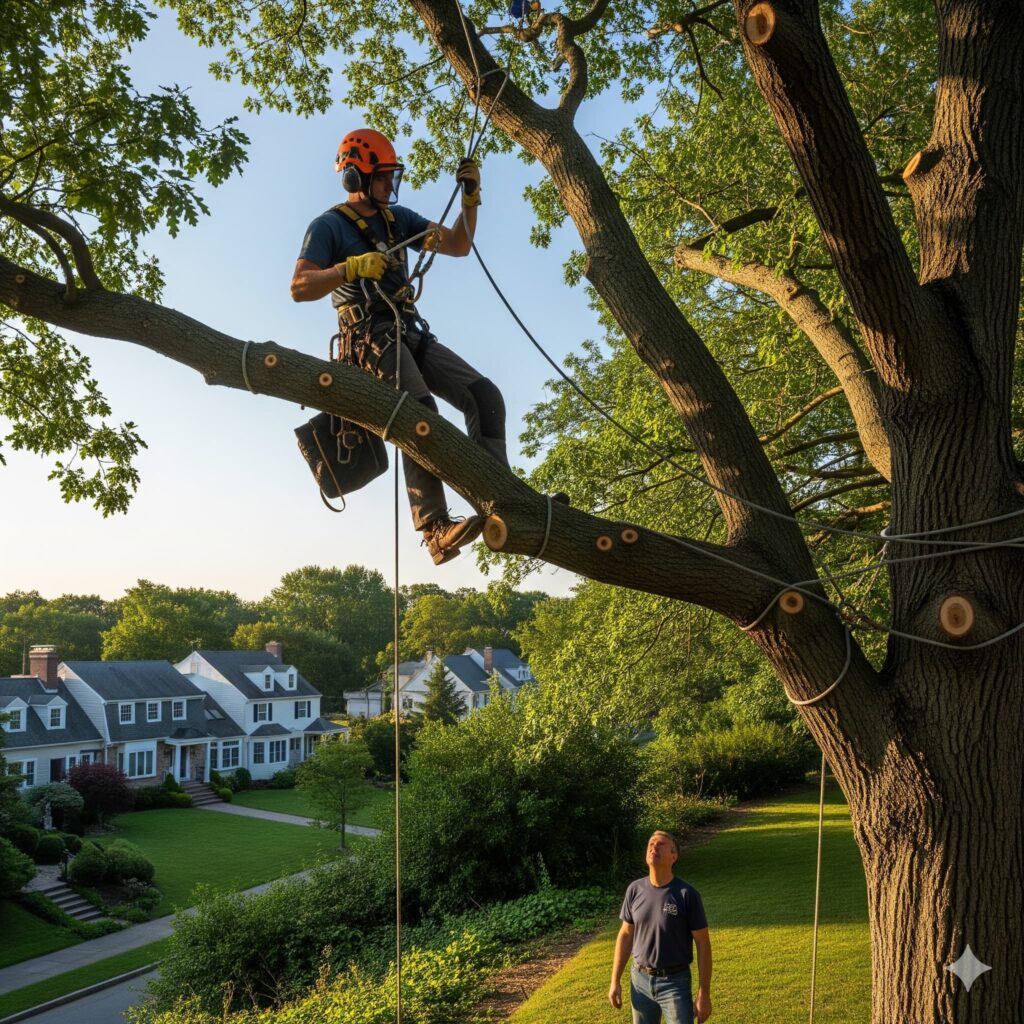
If you have a weakened or damaged tree, there are ways to keep it standing longer using cable systems and tree bracing. Cable systems use strong steel cables or rigid bracing rods to add structural support to weakened branches and stems, and prevent them from breaking under stress while still enabling trees to grow and provide their ecological functions.
Static Cable Systems
Static cable systems are designed to limit the movement of branches above the crown of the tree to reduce the amount of stress placed on weak branch unions. Static cable systems are made from high-strength aircraft-grade steel cables.
Dynamic Cable Systems
Dynamic cable systems are made from synthetic materials that allow for more natural movement of branches and limbs while still providing the required support for the tree.
The towns of Cliffside Park’s older neighborhoods contain several old oak, maple, and other valuable trees that can be preserved using cable and bracing techniques.
When Cabling and Bracing are Most Effective
Trees with co-dominant stems, weak branch unions, and/or storm damage are often best suited for cable and bracing systems. Trees located along Anderson Avenue and in residential areas of Cliffside Park experience numerous structural failures, which can be corrected through cable systems rather than the removal of the tree.
Bradford Pear, Silver Maple, and other species that are known to have structural failures are good candidates for cable and bracing systems. These systems can greatly increase the life expectancy of trees while continuing to provide shade, aesthetic appeal, and increased property value.
Selective Crown Reduction and Structural Pruning
Reduction of the crown of a tree to decrease its overall height and weight load will maintain the natural shape and health of the tree. The reduction is achieved by systematically removing selected branches to reduce wind resistance and stress on the trunk and root system, thereby making the removal of the tree unnecessary.
Structural pruning addresses the poor branching architecture of a tree and removes competing leader branches that may weaken the structural integrity of the tree. In many cases, homes in Bergen County have trees that can be greatly improved using proper pruning techniques that address safety issues while maintaining the contributions of the tree to the aesthetic of the landscape.
Structural Pruning Technique for Problem Solution
Pruning for clearance removes branches that interfere with buildings, utilities, and sightlines without the necessity of completely removing the tree. This provides the homeowner with the opportunity to maintain the benefits of the tree while resolving the specific problem that prompted the consideration of removal.
Deadwood removal eliminates hazardous branches and debris, and improves tree health and aesthetics. Trees located near Grantwood Park and other residential areas of Cliffside Park often benefit from the removal of dead branches that pose a risk to people and property.
Root System Management Solutions
Root barriers and deflection systems can be used to resolve problems related to foundations and hardscape that are caused by the root system of a tree without having to remove the tree. Root barriers and deflection systems are designed to direct the root system of the tree away from sensitive areas, such as foundations, patios, and sidewalks, while continuing to allow the tree to thrive in its location.
Root pruning and soil amendments can improve the stability and health of trees that are experiencing structural problems as a result of poor growing conditions. Properties in Cliffside Park with diverse topography often benefit from these specialized treatments to address the underlying cause of tree decline.
Infrastructure Protection Strategies
Installing root barriers at the time of landscaping projects will help to prevent conflicts between tree roots and structures, driveways, and utility lines in the future. By taking this proactive approach, the cost and effort associated with removing a tree in the future will be eliminated while protecting the homeowner’s investment in his/her property.
Compacted soil and aeration treatments can improve the health of tree roots in urban settings where compaction of the soil stresses trees and contributes to decline. Often, restoration of tree vigor and elimination of conditions leading to removal occur through these treatments.
Disease and Pest Treatment Programs
In addition to trees being removed due to structural problems, many trees that are plagued by disease or pests can be saved through the implementation of professional plant-health-care programs. Systemic treatments, soil amendments, and targeted interventions often restore tree health and eliminate the need to remove the tree.
Dutch Elm Disease and Emerald Ash Borer are examples of serious threats that can be prevented through systemic treatments to protect valuable trees from becoming infected.
Proactive Care Approaches
Early detection of problems and proactive intervention can prevent many conditions from progressing to the point where removal of the tree is necessary. Arborist consultations can identify potential problems before treatment options are limited and expensive.
Nutritional programs and soil improvements treat the underlying health issues that make trees vulnerable to pests and diseases. These holistic approaches often restore the health of trees and eliminate the factors contributing to decline and structural problems.
Partial Removal and Crown Modification
Removal of select sections of larger trees while preserving the healthy portions of the tree can alleviate safety concerns without the need to remove the entire tree. This method is especially useful for trees that have been damaged by storms and/or have localized disease problems.
Crown raising and selective removal of limbs can resolve issues related to structures or utilities that are being obstructed by the tree while maintaining the major contributions of the tree to the landscape.
Hazard Mitigation Methods
Lightning-protection systems can protect valuable trees from storm damage and preserve the aesthetic and economic value of the tree. Lightning-protection systems are especially beneficial for larger specimen trees that are in exposed locations.
Temporary guy-wire systems and support structures can provide stabilization to trees that are recovering from damage or treatment to prevent immediate removal, and give time for recovery or an alternate course of action to be taken.
Tree Transplantation and Replacement Options
Larger trees can be transplanted to different locations within the same property to resolve site conflicts and retain the value of the tree. Transplanting of mature trees can be a viable option for trees that are healthy but improperly situated.
Tree-moving companies specialize in transplanting mature trees to different locations of large properties where they can continue to grow without causing problems.
Relocation Considerations
Factors that determine the likelihood of success of a tree relocation project include timing, tree species, and the physical condition of the site where the tree is being moved.
Assessments conducted by professionals will determine if relocation is a viable option to the removal of specific trees and/or the situation.
Post-Translation Care Requirements
Following transplanting, trees require specialized care, including frequent watering, fertilization, and monitoring to ensure the successful establishment of the tree in its new location. While this level of care is a significant investment, the long-term retention of a valuable mature tree makes it worthwhile.
Sequential Planning for Long-Term Success
By selecting suitable replacement tree species and locations, landscape managers can achieve long-term management objectives while resolving the initial problems with the existing trees. Professionals can assist in developing integrated landscape plans that will avoid similar problems occurring with future replacements, and also ensure that the new trees do not conflict with structures, utilities, and/or other landscape components.
Cost/Benefit Analysis of Tree Preservation
Compared to removal and replanting, tree-preservation methods generally cost much less and offer immediate benefits that newly planted trees will not provide for years to come. Valuable mature trees contribute to the value of a property by thousands of dollars annually while providing ecological functions that take decades to replicate.
Insurance companies often prefer preservation methods that minimize liability while maintaining the value of a property. A well-maintained tree with properly supported systems typically poses fewer hazards than one that has been removed and replaced.
Before deciding on the removal of a tree on your Cliffside Park property, discuss preservation alternatives that could solve your concerns while retaining the benefits of the mature tree with our certified arborists. Many times, the need for removal can be solved with the application of tree-care practices that preserve your landscape investment for generations to come.