
Menu
Emergency Tree Service Costs in Cliffside Park
Emergecy Tree Service Cliffside Park
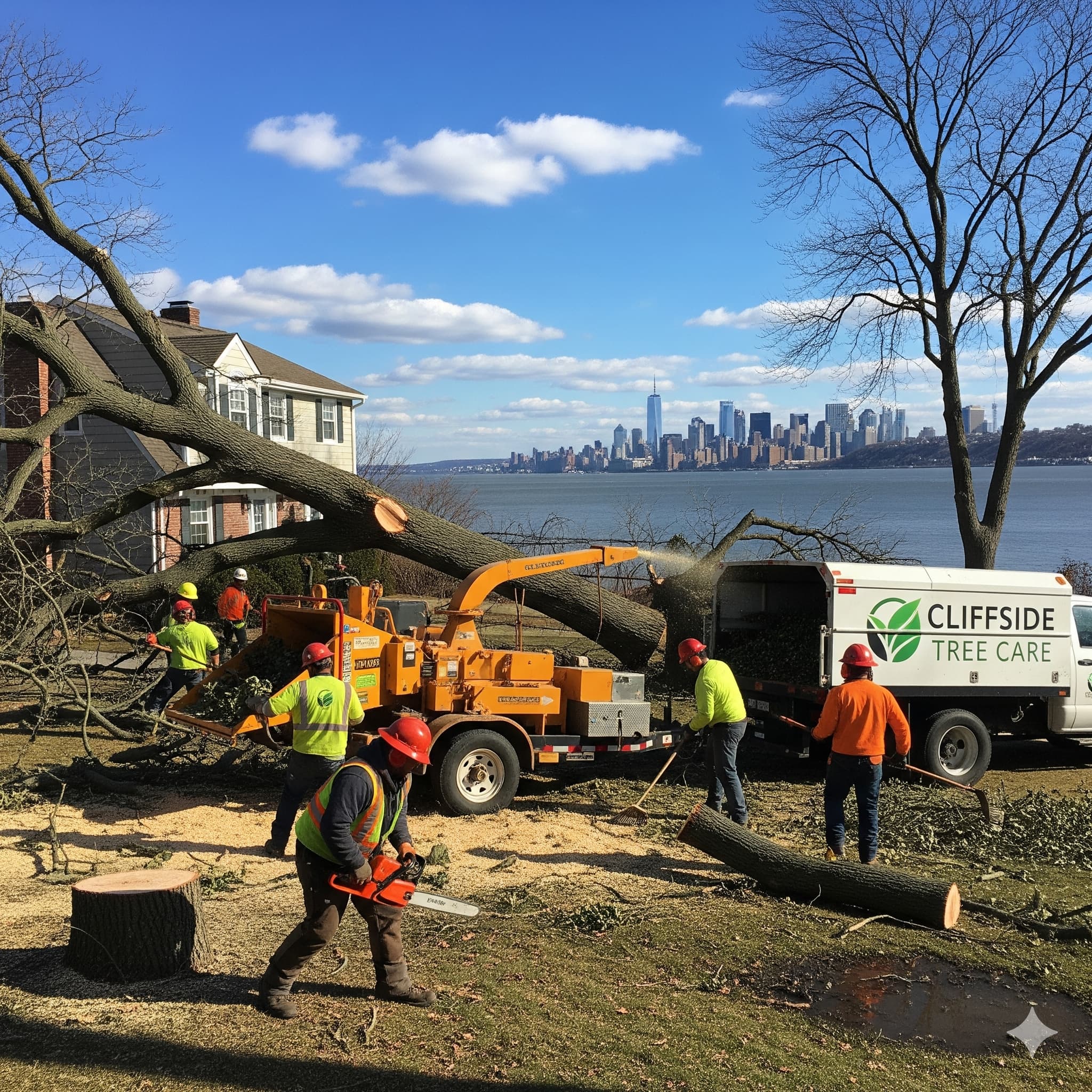
When storms strike or trees fail unexpectedly, understanding emergency tree service costs helps Cliffside Park homeowners make informed decisions during stressful situations. At Tree Pros Cliffside Park, we’ve responded to countless emergencies throughout our community, from storm damage near the Palisades to fallen trees blocking Anderson Avenue, and we understand that cost transparency becomes crucial when safety and property protection are at stake.
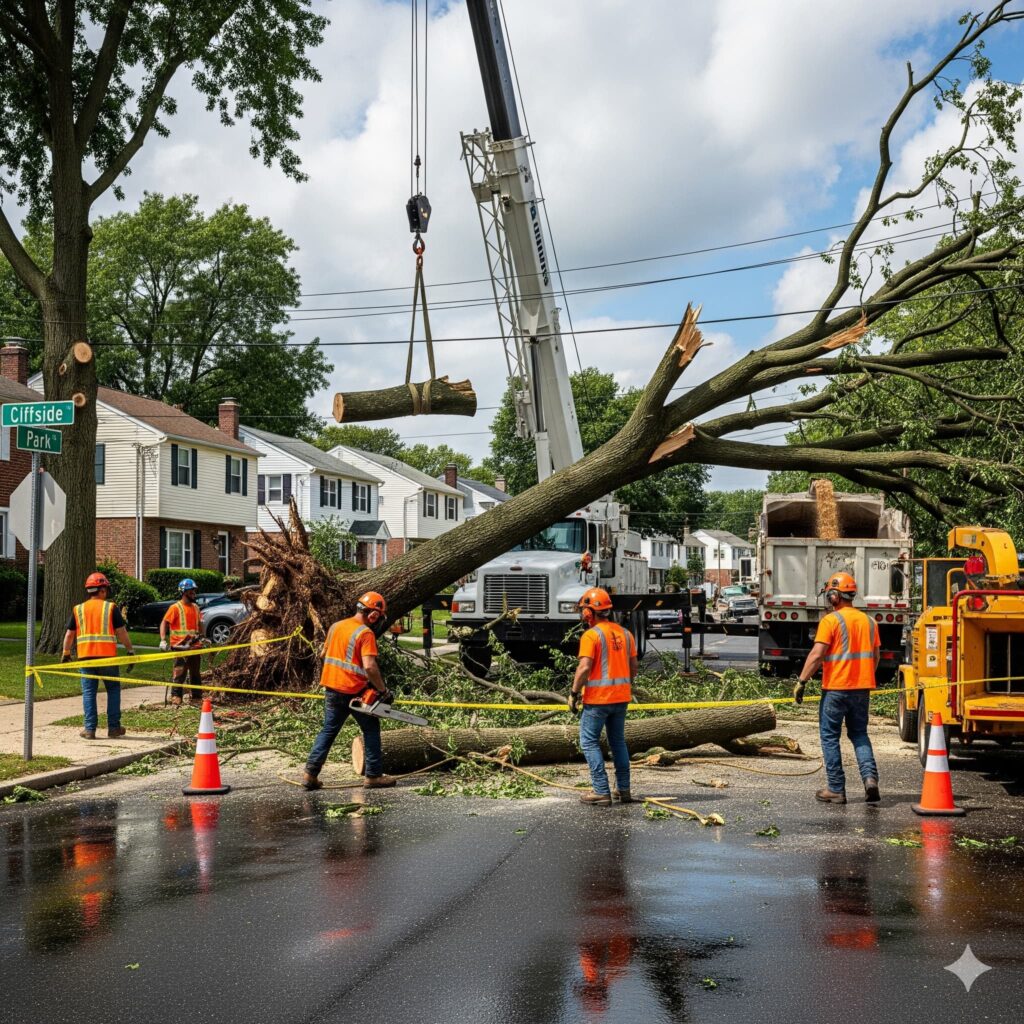
Average Emergency Tree Service Pricing in Cliffside Park
Emergency tree service in Cliffside Park typically is priced at a 20-50% premium to planned service because of the need for immediate response, specialized equipment mobilization, and being available outside regular hours. Current market research and local pricing data indicate an average price of $954 for emergency tree removal in Cliffside Park, with prices ranging from $500 to $3,000 based on the level of complexity and level of urgency of the job.
Rates for emergency services in Bergen County generally vary between $150-$250 per hour for storm response crews, which represents the premium costs associated with the immediate mobilization of crews, specialized safety equipment, and the increased hazards of performing emergency tree work under adverse weather conditions.
Several variables influence how much an emergency will cost:
- The size of the tree influences the cost of emergency removal, with small trees (less than 30 ft) costing $500-$1,000 for emergency removal, medium trees (30-60 ft) costing $800-$1,500, and large trees (more than 60 ft) costing $1,200-$3,500 or more in emergencies throughout Cliffside Park neighborhoods.
- The complexity of location also greatly increases the cost of emergency service. For example, trees have fallen onto homes, are tangled in power lines, or are obstructing main thoroughfares near Memorial Park, which often requires the use of specialized equipment and coordination with utilities, and therefore typically doubles the cost of standard removal.
Costs Associated with Storm Damage Response
Severe storm events cause surge pricing in emergency tree services due to a high demand for emergency tree services and a low supply of qualified emergency crews. In severe weather events that affect Bergen County, emergency tree services can cost anywhere from 100-150% more than regular prices, as homeowners compete for a limited number of qualified emergency services.
In multi-tree storm damage scenarios, companies providing emergency tree services often have package deals for properties that were damaged by multiple trees. However, each emergency removal of a tree during a high-demand period for emergency services typically commands a premium price for immediate availability.
Immediate Response vs. Scheduled Emergency
True emergency responses that require immediate mobilization (usually within 2-4 hours) are billed the highest premium prices, which can be anywhere from $200-$400 per hour for the deployment of a crew. Homeowners in Cliffside Park who reside in the hillside areas of the town may encounter additional obstacles related to accessing their property that can increase the cost of emergency response.
Next-day emergency services typically charge 10-25% less than immediate response times, yet still address urgent safety concerns. Next-day emergency services can be used for situations where there is a need for rapid response, but they do not pose a direct threat to life.
Factors That Influence Equipment and Accessibility Costs
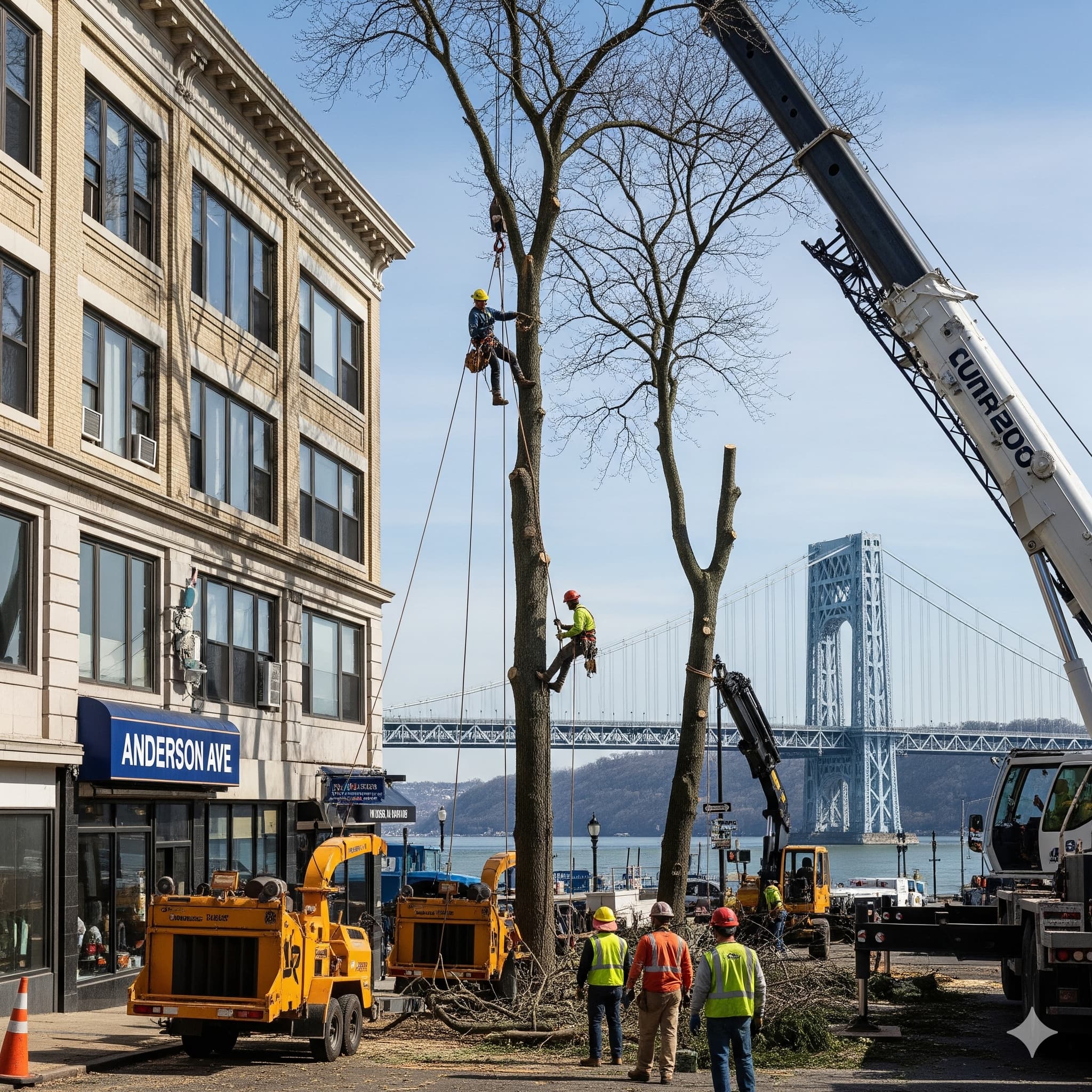
Removing trees using cranes can add $500-$2,500 per day to the cost of removing a tree, representing the costs of transporting and fueling the crane, operating the crane, and insuring the crane. Trees that are located close to structures or in confined spaces in Grantwood Park and residential neighborhoods in Cliffside Park often require the use of a crane for safe removal.
Properties throughout Cliffside Park that have narrow streets, property lines that are too close together, and mature landscaping often present accessibility challenges that result in the requirement for specialized equipment and longer labor hours, increasing costs 25-75% over standard rates.
Utility Company Coordination and Traffic Control
Trees that are entangled in power lines require coordination with the utility company, which can add delays and coordination costs to the emergency response. Once the utility company has cleared the line, the homeowner is responsible for the removal of the tree.
Trees that block public roads require traffic control, which can add $175-$225 per hour for a two-man flagging crew. Main thoroughfares, such as Anderson Avenue and other busy streets in Cliffside Park, may require extensive traffic control during emergency responses.
Time-of-Day and Seasonal Pricing
After-hours emergency services (i.e., evenings, weekends, holidays) typically carry a 25-50% surcharge over standard emergency service rates. Emergency services performed late at night during severe weather events are billed the highest premium due to the increased safety risks and reduced availability of emergency crews.
Emergency services performed during holidays are often billed at twice the standard rate, due to the overtime pay required for crews and the limited availability of crews during holiday periods. Preparing for potential issues through planning can help avoid emergency pricing during predictable high-demand periods.
Demand for Emergency Services During Seasons
Hurricane seasons and severe storm events create a peak in demand for emergency tree services, resulting in a significant increase in emergency pricing. Throughout Bergen County, a surge in emergency pricing occurs when demand far exceeds the supply of qualified emergency contractors during major weather events.
Ice storms and heavy snowfall events present unique challenges for emergency services, requiring specialized equipment and techniques. The costs of emergency services for ice storms and heavy snowfall events are often 30-60% higher than the costs for emergency services provided during non-winter months, due to the hazardous working conditions and the equipment needed to perform emergency services during winter months.
Insurance Coverage and Emergency Costs
Homeowner’s insurance policies usually cover the cost of emergency tree removal if a tree damages a structure on the policyholder’s property, but may not cover the removal of a tree that falls without damaging a structure. Understanding what is covered by homeowner’s insurance and what is not can help homeowners plan for potential out-of-pocket costs for emergency services.
Typically, homeowner’s insurance policies include coverage for the cost of emergency tree removal when a tree damages a home, garage, or other structure on the policyholder’s property, but do not cover the cleanup of a tree that falls in an area of the property that is not covered by the policy (such as a lawn, driveway, etc.).
Documenting and Claiming Insurance Benefits for Emergency Tree Work
Proper documentation is important for filing successful insurance claims for emergency tree services. Photographs taken prior to and after the service, detailed invoices, and professional reports documenting the work completed by the contractor will help ensure maximum reimbursement for emergency tree work covered by insurance.
Using a licensed and insured contractor will protect homeowners during the process of claiming emergency tree services. Local companies in Cliffside Park with experience handling insurance claims and requirements will provide homeowners with the best possible opportunity for reimbursement.
The Benefits of Preventive Maintenance Compared to Emergency Costs
Regular maintenance of trees can reduce the likelihood of needing emergency services and save homeowners money compared to the cost of emergency tree removal. Regular maintenance, such as pruning, assessing the health of a tree, and installing structural support systems for a tree, typically costs significantly less than emergency removal of a failed tree.
An annual inspection of a homeowner’s trees for approximately $200-$400 can identify potential problems before they develop into emergencies. This preventative maintenance can save thousands of dollars in emergency removal costs and protect both property and families.
Assessing Risk and Creating a Plan for Maintenance
Performing a professional risk assessment can help homeowners identify areas to invest in maintenance to prevent the most costly emergency scenarios. Trees that are near structures or power lines should receive a higher priority for maintenance to avoid the cost of emergency removal.
Forming a relationship with a reputable provider of emergency tree services before an emergency develops can enable homeowners to obtain emergency services quickly and often at a lower cost during a high-demand period. All of the neighborhoods in Cliffside Park can benefit from havingadvancede knowledge and a working relationship with a trusted contractor.
Obtaining Written Estimates for Emergency Work
While emergencies limit the ability of homeowners to compare prices for services, it is still wise for them to ask for written estimates when feasible. Companies that are providing quality emergency services will provide clear and complete information about costs to homeowners so that they can make informed decisions about the costs associated with emergency services.
Estimates for emergency work should clearly detail all costs, including the cost of materials and labor, equipment rental or purchase, disposal fees, and any applicable surcharges. These details will be useful for insurance claims and can help prevent disputes over the charges for emergency services after the work is completed.
Terms and Options for Payment
Emergency tree services usually require payment in full when the service is completed, although some companies may offer financing for larger jobs. It is a good idea for homeowners to know what their financial obligations are before the work commences, so that there are no misunderstandings during a chaotic emergency situation.
Some insurance companies will reimburse homeowners for emergency tree work in advance; however, homeowners must confirm that this is allowed through their policy and what procedures are followed to facilitate the payment of emergency services.
Understanding Costs and Making Decisions About Emergency Services for Your Property
Knowing the typical costs associated with emergency tree services and the factors that impact those costs can help homeowners make informed decisions and assist in maintaining the safety and integrity of their Cliffside Park property during an emergency situation. Our 24/7 emergency response team provides transparent pricing and expert services to help you navigate the complexities of an emergency with confidence and professionalism.