Menu
Tree Cutting for Small Yards: Space-Saving Tips in Cliffside Park
Tree Cutting Service Cliffside Park
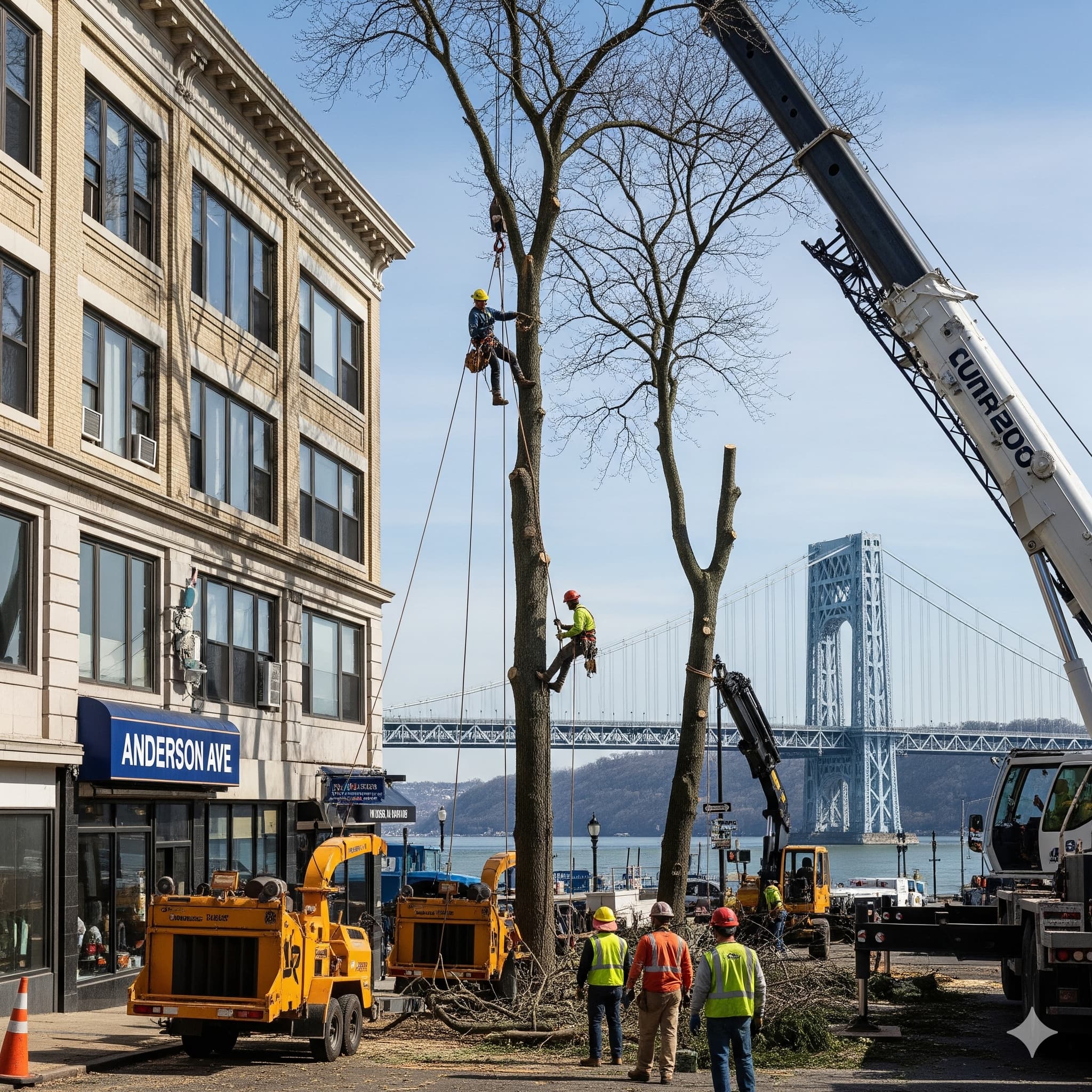
Small yards throughout Cliffside Park present unique challenges when it comes to tree management, requiring specialized tree cutting service approaches that maximize space while maintaining safety and aesthetic appeal. At Tree Pros Cliffside Park, we’ve developed expertise in working with compact properties, from hillside lots near the Palisades to narrow residential spaces around Anderson Avenue, helping homeowners create beautiful landscapes without compromising functionality or safety.
Understanding Space Constraints in Small Yards
Space considerations in small yards in Cliffside Park present an opportunity to understand how mature trees can limit space in small yard settings by being too large for the available space. Many homes throughout Bergen County’s residential neighborhoods have mature trees that have grown larger than their designated area, making it difficult to remove excess branches to keep the tree healthy and to allow for some usable space.
The presence of structures, property lines, and utility infrastructure limits the ability of professionals to cut trees using typical methods. Professionals must develop methods to cut trees under these constraints, and still make sure they do so in a manner that keeps everyone (workers and property owners) safe throughout the cutting process.
Site Assessment of Available Space and Access
A site assessment before beginning any cutting will help professionals identify any obstacles that could limit the type of equipment used for cutting or how the cutting operation would take place. For example, in many residential neighborhoods, such as those in Cliffside Park and surrounding Memorial Park, there are many instances where there is limited access for heavy equipment, thus requiring alternative methods for conducting a safe tree-cutting operation.
Tree-cutting service providers also consider the amount of overhead clearance, if there are any underground utilities, and if the property has any concerns about neighboring properties. A thorough site assessment by a professional will allow the provider to plan the tree cutting service to address all of the spatial constraints of the job while still completing the project safely and efficiently.
Selective Crown Reduction Methods
One of the best ways to save space for small yard settings is to implement crown reduction. Crown reduction is a method of reducing the height and width of a tree while keeping its natural shape and structure intact. The reduction of the crown of a tree allows for more usable space below and around the tree in small yard settings and residential areas, such as Grantwood Park.
To perform a proper crown reduction, the arborist will remove select branches from the tree back to a lateral branch that is at least one-third the diameter of the branch that was removed. This method of reduction helps to maintain the health of the tree while still creating additional space in the yard.
Choosing Which Branches to Remove
Arborists will assess which branches to remove based on the type of tree, the health of the tree, and the spatial constraints of the job. Arborists will look to remove any branches that are competing with each other for sunlight, crossing branches, and any branches that are extending beyond the normal reach of the tree. By removing the branches that are causing the most conflict with space, arborists can create a more compact tree that will grow in a healthier way.
Removing branches that are in conflict with space, removing competing branches, and crossing branches will also help to improve the safety of the trees by preventing them from breaking off in the wind.
Removal of Tree Branches in Confined Areas
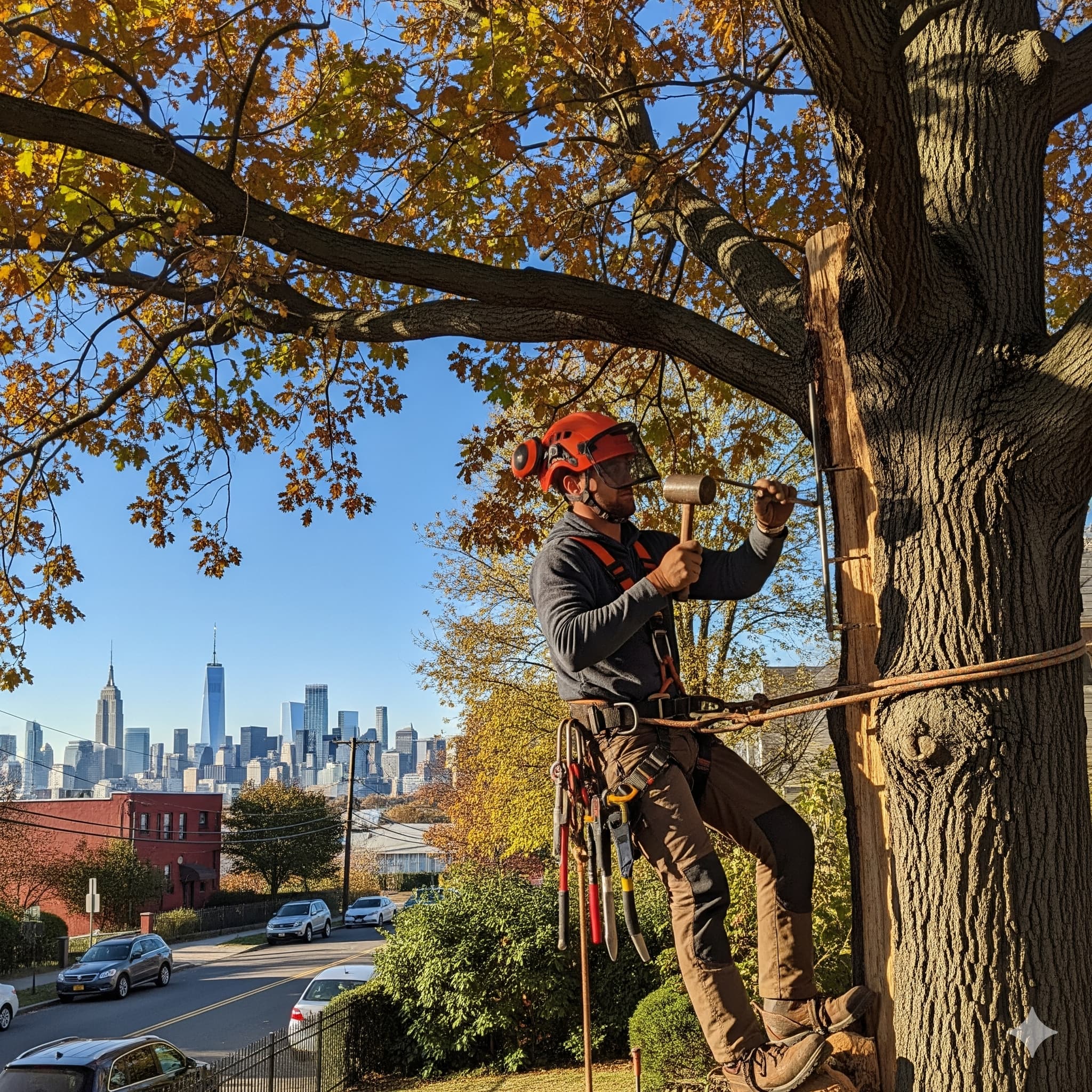
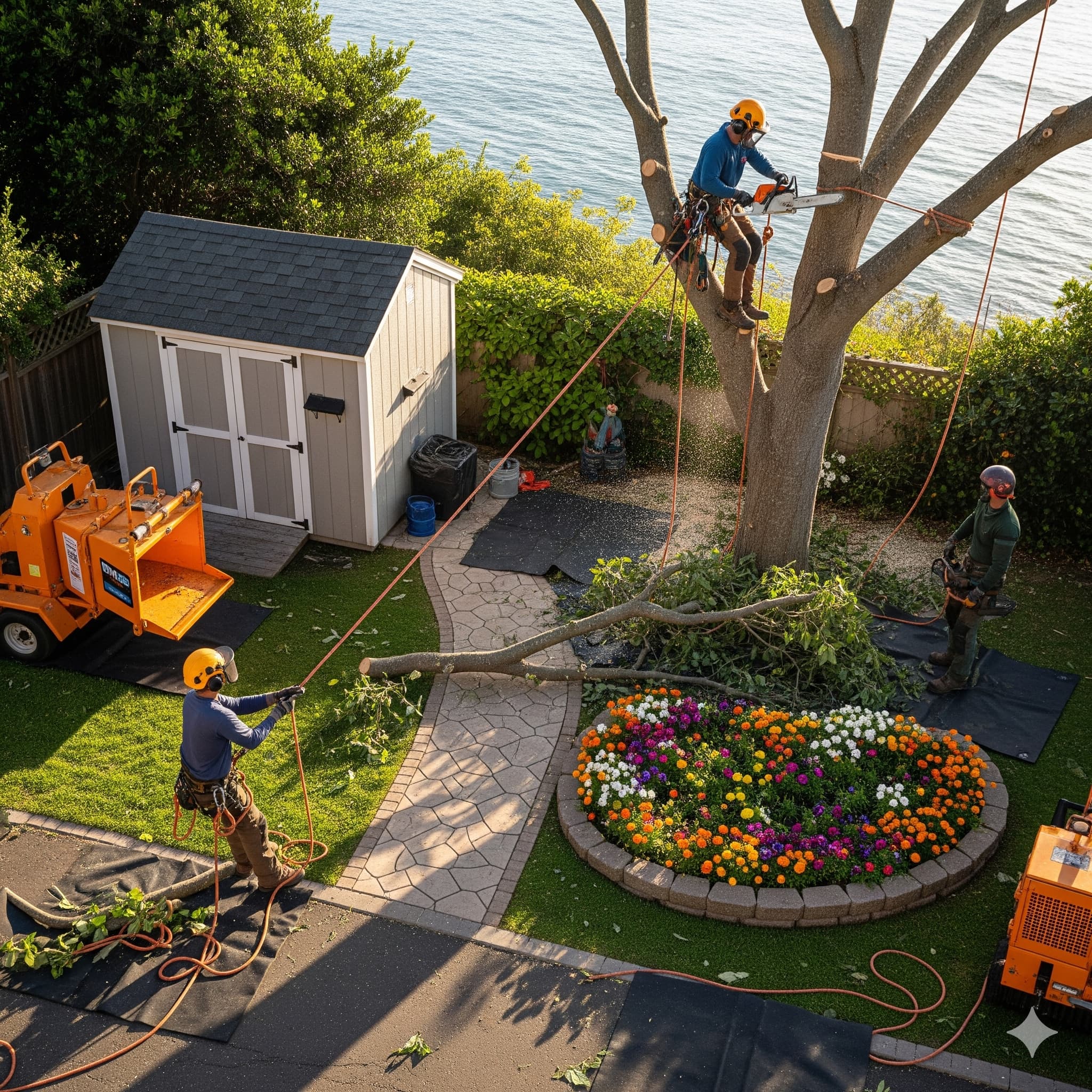
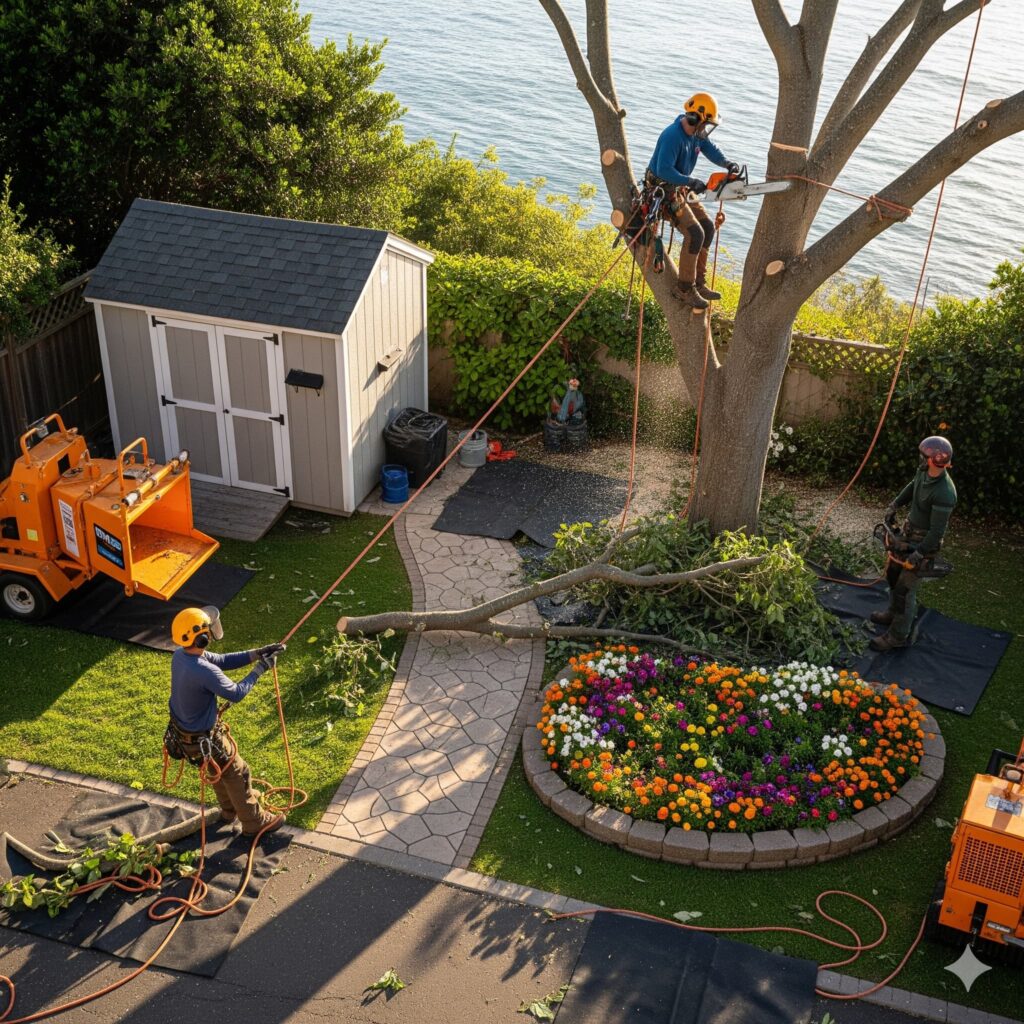
If the decision to remove a tree completely is made because the tree has outgrown the space allotted to it, then arborists will employ specialized techniques to remove the branches of the tree in a safe and controlled manner. One of the most commonly employed methods for removing branches of a tree in a confined area is to dismantle the branches of the tree one at a time from the top down. Arborists will use ropes, pulleys, and rigging to control each branch as it is removed and to prevent damage to surrounding structures, landscaping, and utility infrastructure. Because many of the hillside properties in Cliffside Park have limited access for heavy equipment and are located in proximity to neighboring structures, this method is often used.
Using Compact Equipment
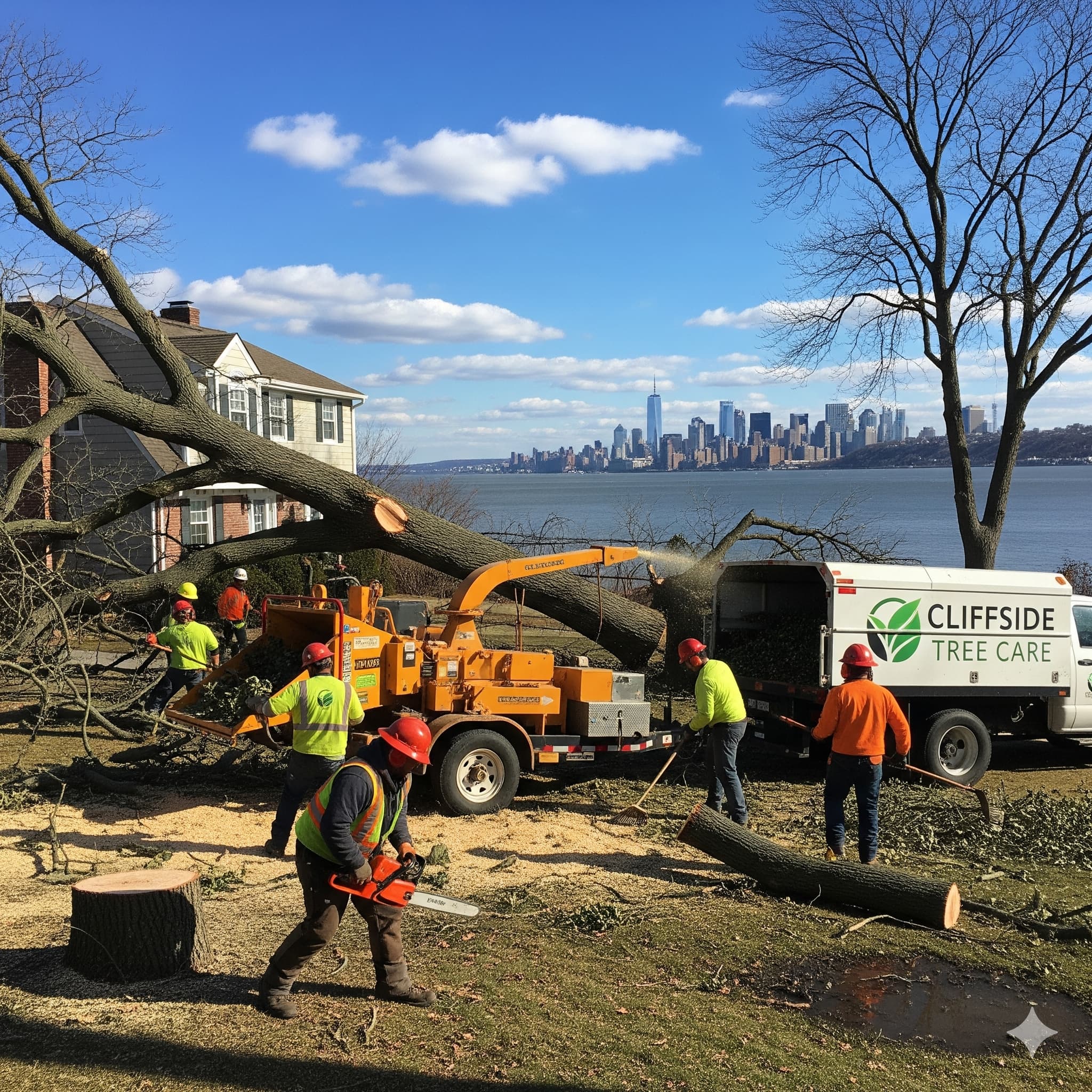
In order to safely operate in small yard settings, tree-cutting service providers will often utilize compact equipment. Compact equipment includes mini excavators, small wood chippers, and portable cranes. These pieces of equipment are designed to fit through the average residential gate or driveway, and are ideal for navigating through tight spaces. In addition to using compact equipment, hand tools, and climbing equipment are also useful in confined spaces where large machinery cannot fit.
Adjusting Techniques Based Upon Site Conditions
Tree-cutting service providers will adjust their cutting techniques based on the site conditions of the job. They will select the best method of cutting based on the available space and the condition of the tree. They will also select the best equipment for the job to ensure that the tree is cut safely and efficiently.
Increasing the Amount of Usable Space Through Pruning
Pruning the top of a tree is known as crown raising. Crown raising increases the amount of vertical space available for walkways, patios, and other outdoor living features. It does this by removing the lowest branches of the tree, thus increasing the amount of space available below the tree. Properly done, crown raising leaves at least two-thirds of the original height of the tree in living branches, thus retaining enough foliage for the tree to carry out photosynthesis and maintain the health of the tree.
Crown raising is especially beneficial for properties in areas such as Zalewski Park, where maximizing the amount of usable space is critical.
Creating Functional Outdoor Space
Trees in small yard settings often block the sun from reaching the grass and plants below, and the roots of the trees can also interfere with lawn mowing and gardening activities. However, with the right type of pruning, it is possible to convert the area beneath a tree into a functional outdoor space. Selectively thinning the branches of a tree and pruning the bottom branches of the tree can allow for increased amounts of sunlight to reach the grass and plants below the tree. Additionally, tree pruning can create enough room for seating areas, children’s playgrounds, and gardens.
There are a variety of pruning techniques that can be used to accomplish this goal, including crown raising and crown reduction. When performed correctly, pruning can create a functional outdoor space without compromising the health of the tree.
Coordinating with Utility Companies
Utility companies often have underground lines and above-ground cables that run through residential neighborhoods in Cliffside Park. As such, many properties in residential areas of Cliffside Park have a significant amount of utility infrastructure running through or beneath them. In order to protect the trees and the people who are cutting them, utility companies must be contacted before performing any cutting operations. Utility companies will advise the contractor as to which areas of the property are safe to cut and which are not, thereby protecting the safety of the contractor and the residents of the property.
Protecting Buildings and Structures
As with any cutting operation, the primary concern of the contractor is to protect the buildings and structures on the property. Contractors will use protective barriers to prevent branches from damaging windows, doors, siding, and roofs. In addition, contractors will use rigging and controlled lowering techniques to guide falling branches away from buildings and other structures.
By taking these precautions, contractors can create a safer environment for themselves and the residents of the property.
Species-Specific Pruning Techniques
Like any other plant, trees react differently to pruning depending on the species of the tree. Some trees, such as fast-growing silver maple trees, require more frequent pruning to manage their size and promote healthy growth. Other trees, such as slow-growing oak trees, require less frequent pruning to prevent the tree from being stressed.
Understanding the differences in how various species of trees respond to pruning will enable arborists to prune trees in a manner that optimizes their performance and longevity in small yard settings.
Replanting After Removal
Once a tree is removed from a property, the homeowner may want to replant another tree in its place. To avoid having the new tree grow into the same problem as the previous tree, the homeowner should select a tree that will grow to a maximum size that will fit within the available space. Homeowners can choose dwarf varieties of trees that grow to a smaller size than full-sized trees. Homeowners can also choose columnar-shaped trees that grow up instead of out. Lastly, homeowners can choose slow-growing trees that will not grow into a problem in the foreseeable future.
Homeowners can consult with a professional arborist to find the perfect replacement tree that will meet their needs and fit into the available space.
Scheduling Prune Operations During the Correct Time of Year
In addition to choosing the correct species of tree, homeowners must also choose the correct time of year to prune their trees. Prune operations are typically scheduled for the dormant season of the tree, as this is the time of year when the tree is not actively growing. Prune operations can also be scheduled during periods of favorable weather, as this will enable the arborist to move safely and efficiently through the property.
Prune operations can disrupt the daily lives of the homeowner and their neighbors. Therefore, scheduling pruning operations during times of the year when they are less likely to cause disruptions is recommended.
Minimizing Disruptions to the Property
Disruptions to the property caused by pruning operations can be minimized by the arborist taking several precautions. For example, the arborist can lay down protective coverings over areas of the property where the homeowner does not want to see mud and debris. The arborist can also strategically position his equipment to prevent it from interfering with the rest of the property. Lastly, the arborist can work in a sequence that is efficient, yet non-disruptive to the rest of the property.
Communicating with Neighbors
When pruning operations are planned to occur on a property that is surrounded by other homes and businesses, it is a good idea for the arborist to communicate with the homeowner’s neighbors. This communication can include giving them advance notice of when the pruning operations will begin and end, what types of equipment will be used, and how the homeowner can contact the arborist if they have any questions or concerns.
This type of communication can help to build trust between the arborist and the homeowner’s neighbors, and it can also help to alleviate any anxiety they may feel about the pruning operations.
Reducing Costs of Prune Operations
While prune operations can sometimes seem expensive, there are steps that homeowners can take to minimize their costs. For example, if a homeowner has multiple small trees that need to be pruned, he/she can ask the arborist to schedule the pruning operations for the same day. This can result in a discounted rate for the services. Another option is for the homeowner to ask the arborist if he/she has any package deals available. If the homeowner can get a group of neighbors to hire the arborist to prune their trees at the same time, the homeowner can expect to receive a discount.
Planning Long-Term Maintenance Needs
Finally, to prevent pruning operations from needing to be performed more frequently than necessary, homeowners should establish a long-term maintenance plan. This plan can include regular inspections of the trees by an arborist to catch any problems early on. The plan can also include a routine pruning operation to keep the trees looking their best and to prevent disease and pests from developing.
Establishing a long-term maintenance plan can help homeowners save money in the long-run by eliminating the need for expensive emergency repairs. It can also help homeowners to preserve the value of their property and to enjoy their outdoor spaces for years to come.