Menu
Safety Protocols for Commercial Tree Removal in Cliffside Park
Commercial Tree Removal Cliffside Park
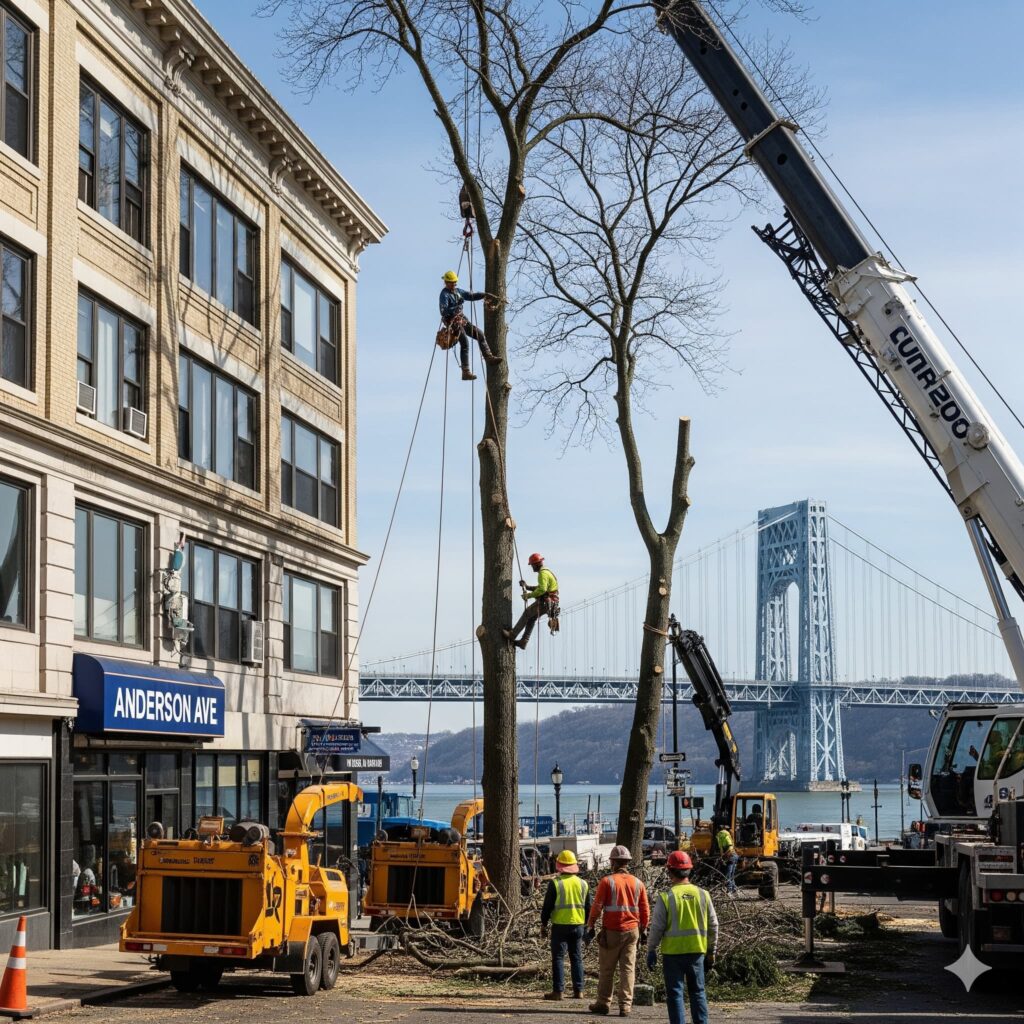
Commercial tree removal in Cliffside Park requires strict adherence to safety protocols that protect workers, property, and the public. Unlike residential tree services, commercial tree removal often involves larger-scale operations near busy areas like Anderson Avenue or around commercial properties overlooking the Hudson River. At Tree Pros Cliffside Park, we understand that comprehensive safety management is essential for successful commercial operations while maintaining our community’s reputation for professional excellence.
OSHA Requirements for Commercial Tree Removal Operations
All commercial tree removal operations must comply with the U.S. Occupational Safety & Health Administration (OSHA) logging standards, which are found at 29 CFR 1910.266. The OSHA logging standard covers the types of equipment required for commercial tree trimming and removal operations, safe work practices for those operating that equipment, and provides specific training requirements for reducing risk to workers involved in tree care operations.
The OSHA logging standard has several personal protective equipment (PPE) requirements, such as:
- Hard hats
- Eye and facial PPE
- Leg protection for chainsaw operators
- High-visibility clothing for workers operating equipment in proximity to roadways.
Additionally, the OSHA logging standard mandates specific safety protocols for addressing electrical hazards, especially when working around power lines along major roadways such as Palisade Avenue or the George Washington Bridge approaches.
Documentation of OSHA Compliance
Commercial tree removal operations must document their compliance with OSHA regulations. Documentation for OSHA compliance includes written hazard assessments, employee training records, and incident reporting procedures. As a result, commercial tree removal operations are responsible for maintaining these records and for ensuring that all employees are aware of their rights and responsibilities regarding federal safety regulations.
Pre-Operational Site Assessments and Plans
Before performing any commercial tree removal job, commercial tree removal operations must perform a thorough site assessment of the property. The purpose of this assessment is to identify potential hazards and develop safety protocols specific to each location. This assessment involves identifying overhead power lines, underground utilities, nearby buildings, and pedestrian or vehicular traffic patterns.
The site plan must take into consideration the unique geography of Cliffside Park, i.e., properties located on the Palisades Cliffs, which can create unique challenges due to the wind conditions and limited access. Prior to starting work, an emergency evacuation route and communication protocol must be identified for each member of the crew, so they will be prepared to respond quickly in case of an emergency.
Traffic control planning is another essential aspect of a commercial tree removal project, especially if it is to be performed in a commercial district or near busy roads. This involves coordinating with local authorities, placing signs, and creating a safe work zone that will protect both the workers and the public from falling debris or equipment operation.
Daily Equipment Pre-Operational Inspection Checklists
Each piece of commercial tree removal equipment must have a daily pre-operational inspection checklist completed by the operator. Each type of equipment has its own set of inspection procedures. For example, chainsaws, aerial lifts, cranes, and chippers have different inspection procedures to ensure the operator verifies that the safety system, cutting mechanism, and protective guard(s) are functioning properly.
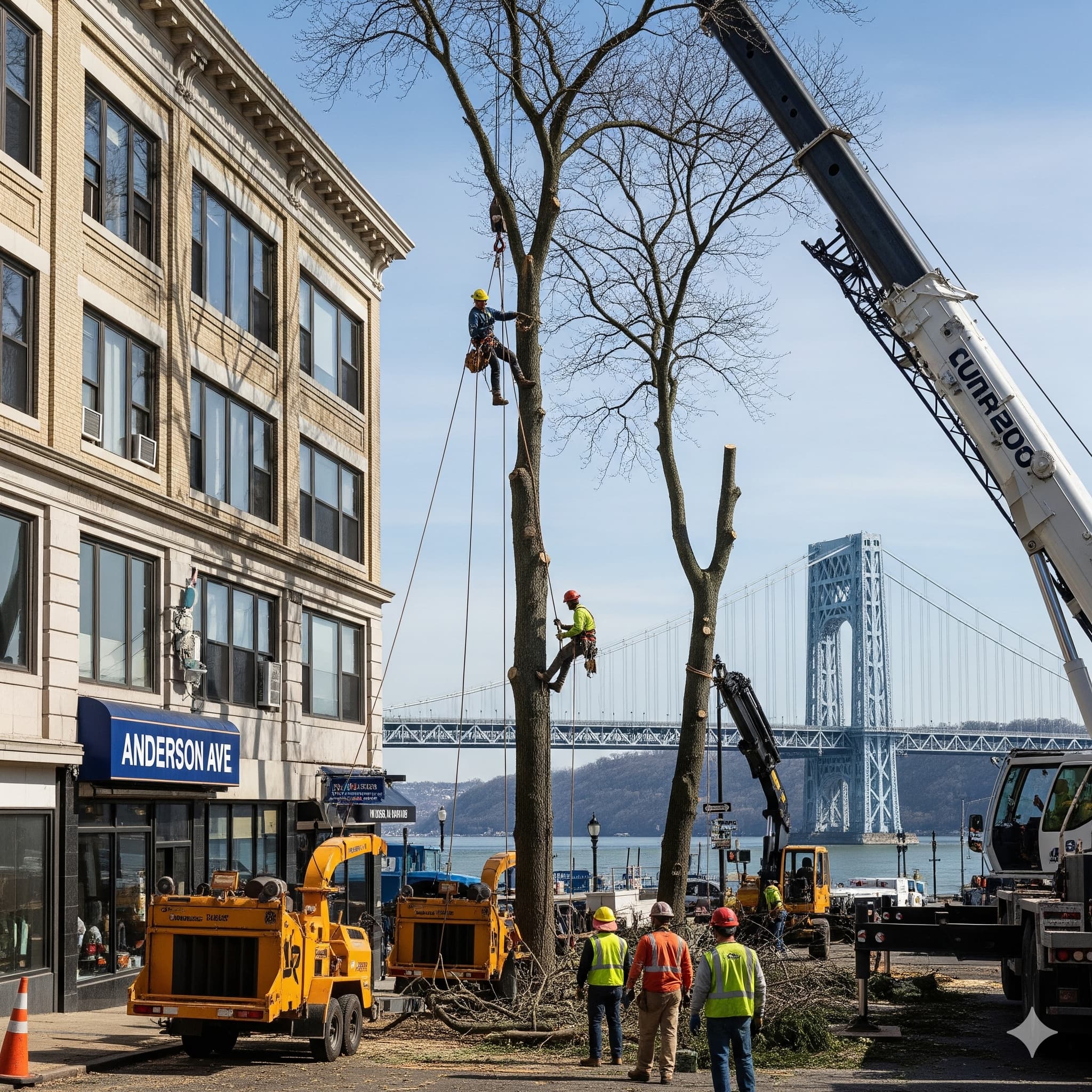
Crane operations are particularly restrictive and require extensive documentation of the crane’s operation. This documentation includes verifying that the load being lifted is within the crane’s capacity chart, the correct position of the outriggers, and the proper angle of the boom. Certified crane operators must meet with the ground crew before making a lift to coordinate the necessary communication signals and emergency procedures.
Training for Commercial Tree Removal Crew Members
Commercial tree removal crews must complete specialized training beyond the typical training provided to individuals involved in residential tree removal. In addition to learning how to safely remove trees, crew members must also learn how to operate fall protection systems, how to recognize electrical hazards, how to safely operate equipment, and what emergency response procedures to take in a commercial environment.
For example, chainsaw operators must learn how to prevent kickbacks, how to properly cut wood, and how to keep their equipment well-maintained. Aerial lift operators must become certified in the safe positioning of the aerial device, the weight limit of the aerial device, and the emergency procedure for descending from the aerial device. Ground crew members must learn proper hand signals, how to recognize hazards, and how to safely handle debris.
Regular Safety Meetings
Safety meetings must be held regularly to review training topics and to discuss site-specific hazards. These meetings must be utilized to discuss weather issues, equipment problems, and changes in policy or procedure that may impact the workday.
Electrical Hazards and Utility Coordination
Electrical hazards pose some of the greatest risks to commercial tree removal workers, especially in urban areas like Cliffside Park. Overhead power lines are ubiquitous in Cliffside Park, and all work must be coordinated with electric utilities to ensure safe working distances. There are specific minimum approach distances to electric utilities in the OSHA regulations that must be followed. Line clearing operations require specialized training to recognize electrical hazards and to follow the proper approach procedures to avoid injury from electrical shock.
Utility locating using 811 services must occur prior to any digging or stump grinding operations to prevent contact with buried electrical, gas, or telecommunication lines that can cause serious injuries or disrupt business operations in Cliffside Park.
Fall Protection Systems and Climbing Safety
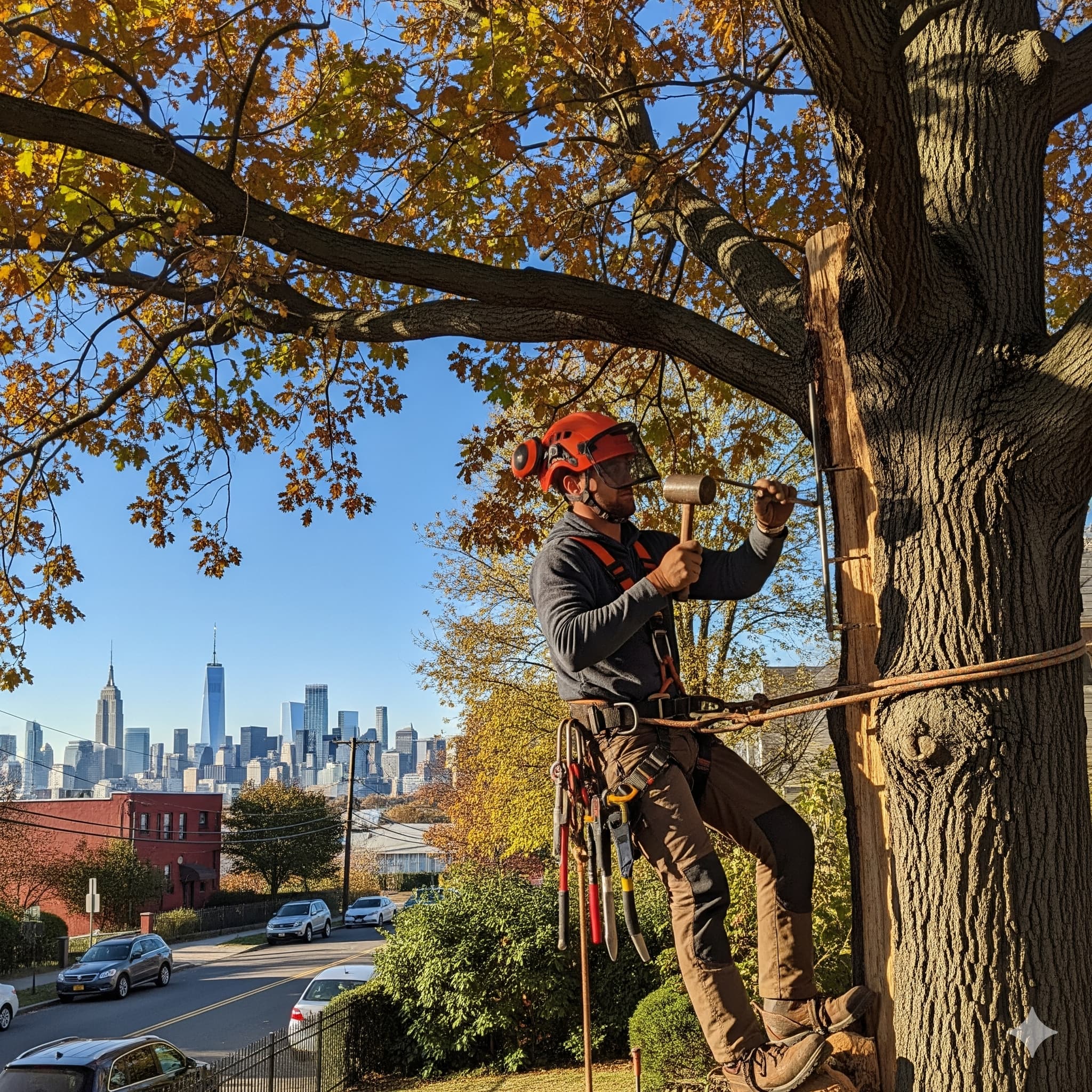
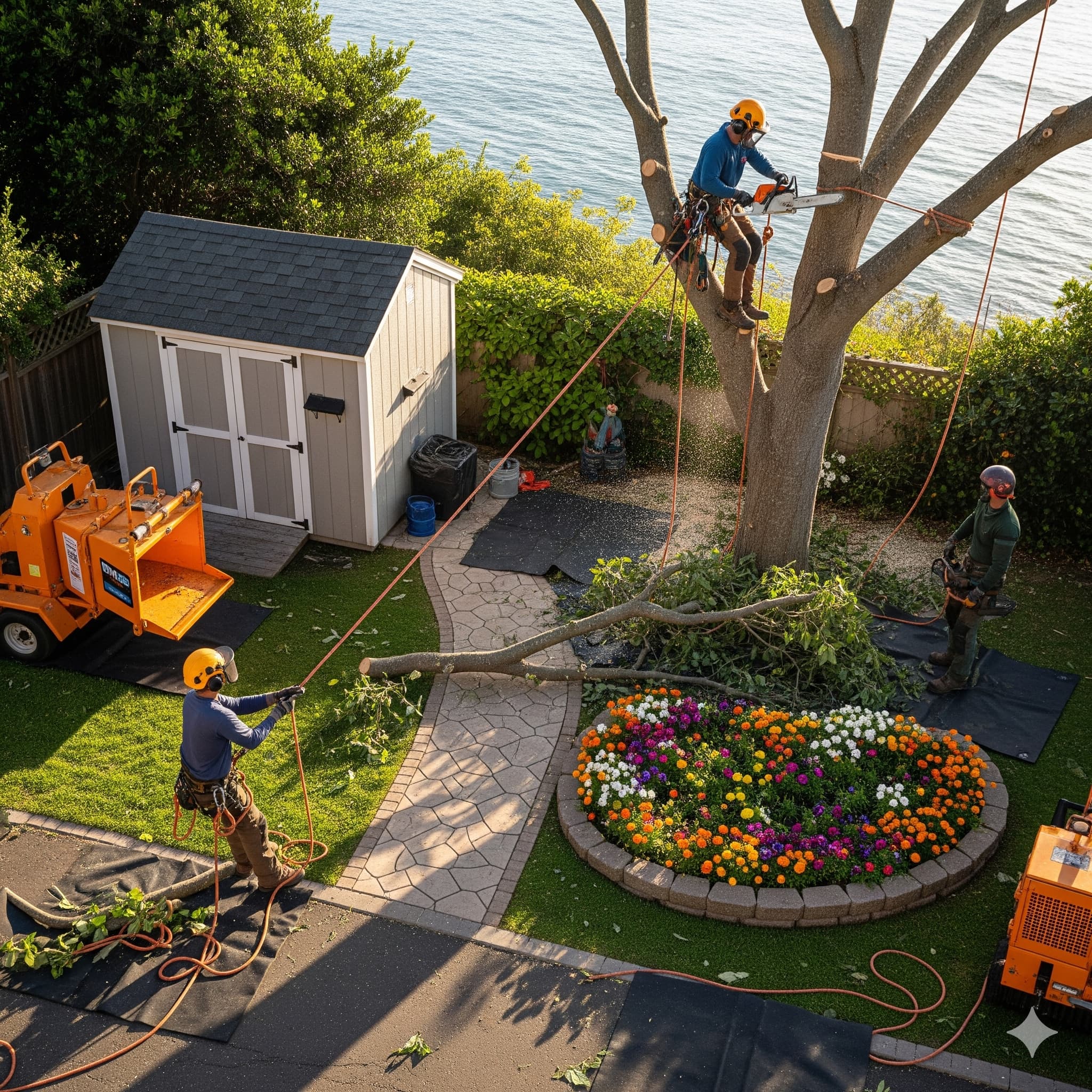
Fall protection is a vital part of commercial tree removal safety since falls are among the top causes of serious injuries in tree care operations. Any employee exposed to fall hazards must utilize approved fall protection equipment such as full-body harnesses, positioning devices, and properly inspected ropes and hardware.
Climbing systems must be inspected regularly and replaced as recommended by the manufacturer. The inspections of ropes and harnesses must be documented, and equipment that has been damaged, cut, etc., must be immediately removed from service.
Alternative forms of access for aerial lifts can significantly reduce climbing-related risks; however, proper setup, stabilization, and operation procedures must be followed to ensure worker safety at heights.
Traffic Management and Public Safety
Commercial tree removal in an urban setting like Cliffside Park requires a detailed traffic management plan to protect workers and minimize disruptions to business and public transportation. Establishing a work zone consistent with Manual on Uniform Traffic Control Devices (MUTCD) standards is essential, including establishing proper signage, barriers, and flagging procedures.
Communicating with local businesses and residents can help mitigate conflicts and educate the public about temporary access restrictions and/or parking restrictions. This is especially true in Cliffside Park, where commercial operations along Anderson Avenue or other commercial corridors rely heavily on customer access.
Specific Safety Requirements for Each Type of Equipment Used in Commercial Tree Removal Operations
There are specific safety requirements for crane-assisted tree removal operations, chipper operations, and stump grinding operations. Crane-assisted tree removal operations require developing safety protocols for rigging operations, load calculations, and communication between crane operators and ground crews. Each lift must be within the crane’s capacity charts, and the rigging equipment must be rated and inspected properly.
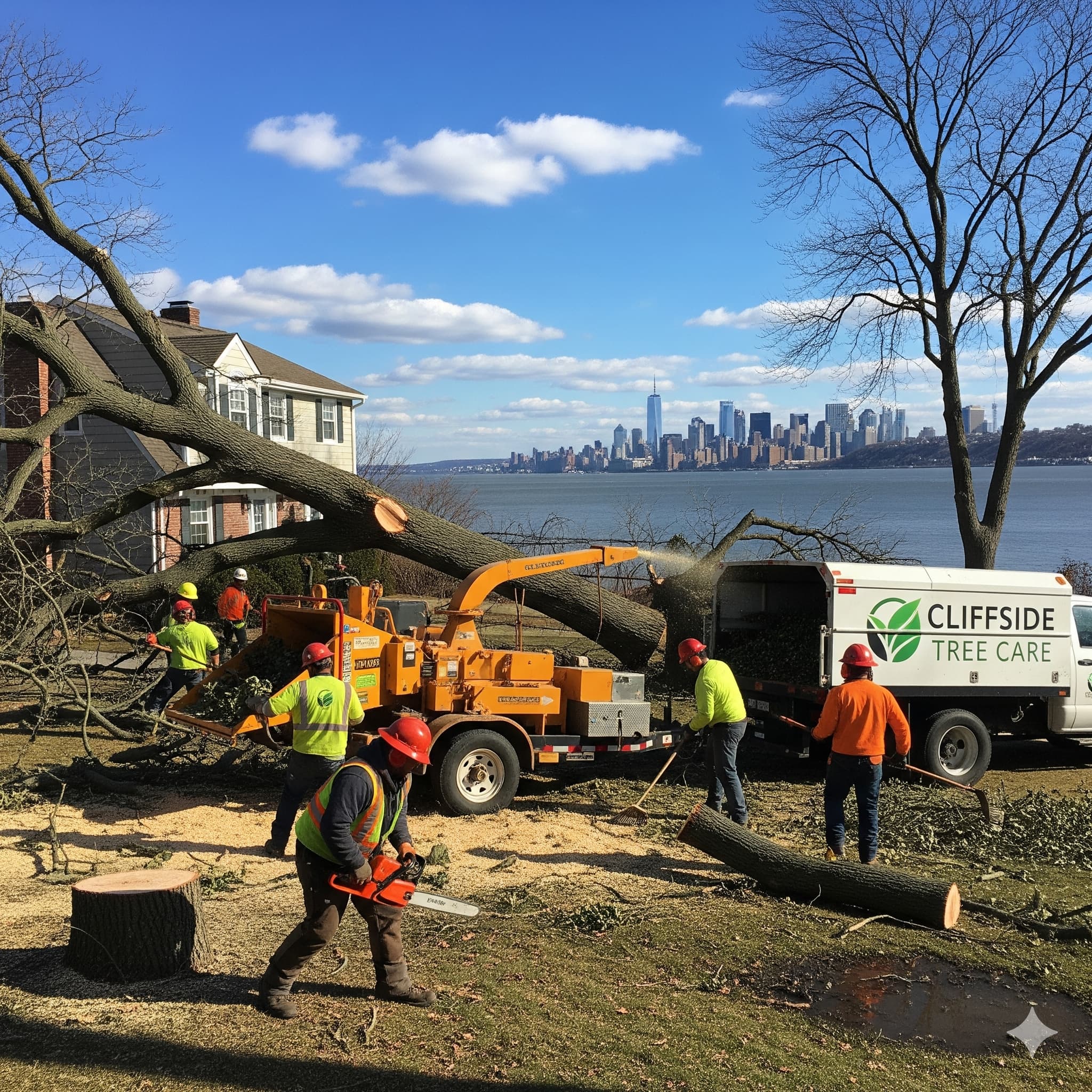
Chipper operations require safety procedures for feeding the chipper, stopping the chipper in case of an emergency, and creating safe escape routes. Chipper operators must understand the risks of kickbacks and how to position themselves properly when feeding material into the chipper.
Stump grinding operations require procedures for containing debris, protecting bystanders, and operating the grinder properly. Verification of underground utilities before commencing grinding operations is required to prevent contact with buried services.
Establishing Comprehensive Emergency Response Procedures
Commercial operations must establish a comprehensive emergency response procedure that addresses medical emergencies, equipment malfunctions, and environmental hazards. All crew members should be aware of the procedures for contacting emergency services, providing first aid, and securing the work site during an emergency.
Reliable Communication Systems
Reliable communication systems are essential for communicating quickly and efficiently between crew members, supervisors, and emergency services. This includes having a secondary method of communication available in the event that the primary communication system fails during operations.
Reporting Incidents and Near Misses
Incident reporting and record keeping are essential for documenting accidents, near misses, and equipment malfunctions. Documented information can be used to identify trends and implement corrective actions to prevent similar incidents in the future.
Protecting the Environment and Complying with Environmental Regulations
Commercial tree removal operations must adhere to environmental regulations to protect environmentally sensitive locations and prevent pollution. Examples include proper storage and disposal of fuels, hydraulic fluids, and other chemicals used in the operation of equipment.
Debris generated by the commercial tree removal operation must be disposed of in accordance with local regulations and environmental guidelines. Chipped organic debris can often be recycled through chipping or composting programs. Other debris must be disposed of in accordance with the relevant local regulations.
Protecting Soils During Equipment Operation
During commercial tree removal operations, it is essential to protect soils from compaction and contamination. This is especially important in Cliffside Park, where properties are often small, and there is limited space to maneuver equipment and store debris.
Compliance with Tree Pros Cliffside Park Commercial Safety Standards
At Tree Pros Cliffside Park, we consistently exceed industry safety standards with our commercial tree removal operations by utilizing formal training programs, implementing routine equipment maintenance schedules, and adhering to all relevant regulatory requirements. Our crew members participate in ongoing safety training that addresses both general industry safety standards and site-specific hazards common in our geographic area.
We maintain extensive safety documentation, including employee certifications, equipment inspection records, and incident tracking systems, to continually monitor and improve our safety performance. We believe in protecting our employees while providing our commercial customers with dependable and professional services to meet their operational needs.
We have developed a comprehensive emergency response plan that allows for immediate assistance to our commercial customers in the event of a tree-related emergency that may disrupt business operations or put people at risk. We have 24-hour emergency response capability, comprehensive insurance coverage, and established relationships with local emergency services and utility companies.